What the Whisper Under the Log Drum Is Actually Saying
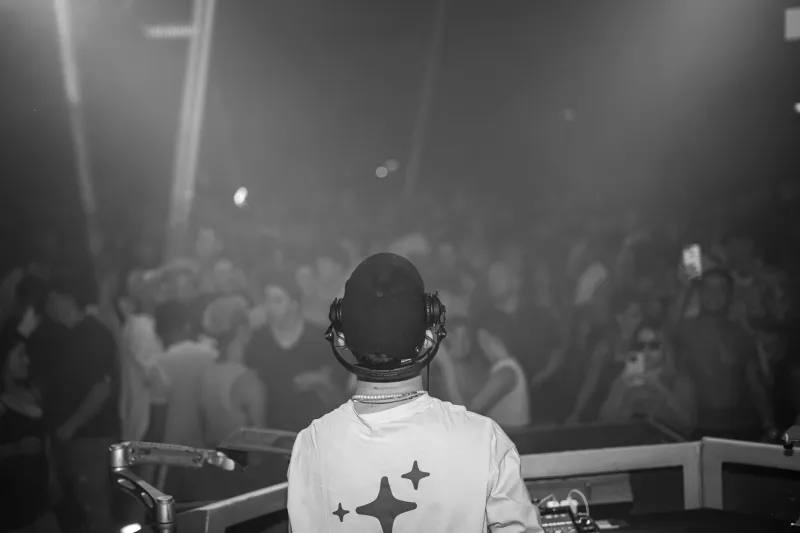
There's a moment in every amapiano set when the room locks in — not on a chorus, not on a drop, but on a whisper. Four syllables, half-swallowed by the mix, and two thousand people in a Brooklyn warehouse move at exactly the same time. Almost none of them could tell you what was just said.
That's the strange gift of amapiano in the US right now. The genre has crossed over so completely — club residencies, festival side stages, the playlist at your gym — that it no longer registers as foreign music. Which is exactly why it's worth slowing down. A lot of what sounds like pure atmosphere is a very specific conversation in Zulu, Sotho, Tsotsi-Taal, and South African English about dancing, money, exes, and the people who only call when the song is hot.
The Name Is Already a Translation Lesson
Start with the word itself. Ama- is a Zulu plural prefix. Piano is piano. So “amapiano” lands somewhere around “the pianos” — collective, plural, a crowd thing rather than one instrument. That's your first clue about how the music behaves.
The genre grew out of South African townships around Pretoria and Johannesburg in the early 2010s, built on the log drum (that deep, rubbery bass hit), soft jazzy chords, and a tempo parked near 112 BPM. The name of the game is space. Everything is mixed to leave room — including the vocal, which is often treated as another percussive element rather than a lead.
Four Languages in a Single Hook
There is no such thing as “Amapiano language.” A typical record moves between Zulu, isiXhosa, Sesotho and Setswana, South African English, and Tsotsi-Taal — a township argot that mixes Zulu, Sotho, Afrikaans, and English and has a long tradition of saying the dangerous thing in a way that slides past the person in charge.
Because the vocal is often whispered, layered, or chopped into a loop, each language arrives in fragments. You're not hearing a verse. You're hearing the two seconds of a verse that the producer decided was the catchiest thing in the room.
A Beginner's Decoding Kit
You don't need a course. You need about ten words.
- Ntwana — boy, homeboy, my guy. Tsotsi-Taal. The single most useful word in the genre.
- Moja — fresh, nice, cool. As in: that log drum is moja.
- Asambe — let's go. Appears in hooks constantly, often because it's the only line the crowd needs.
- Woza — come. Hamba — go. Opposite directions, same energy.
- Vula vala — “open, close.” A hip movement, named literally.
- Sho't left — “sharp left.” A sideways kick-step that doubles as a dance instruction.
- Phansi — down. As in: get down.
- Yoh — whoa. Eish — ugh, or yikes, or hey, depending entirely on tone.
- Banyana / abafana — the girls / the boys.
- Isgubhu — a beat, a rhythm. Also the name of a whole adjacent scene.
The Hook Is Usually a Dance Instruction
Here's the thing American listeners miss most: in a lot of amapiano, the vocal isn't telling a story. It's choreographing. “Asambe” four times in a row isn't lazy songwriting — it's a room being told what to do, in the same way a square dance caller repeats himself on purpose.
That's why the vocals are so repetitive and so low in the mix. They're functional. They're the reason the floor moves as one unit instead of forty people doing forty different things.
Where the Wit Actually Lives
The softer delivery is a trap. A lot of amapiano lyrics are funny, petty, and pointed — a whispered boast about money, a jab at an ex who's been watching from the sidelines, a note about people who suddenly became available once the song charted. The whisper is the joke: you can say something vicious in a voice this gentle and the whole dance floor hears it while the person it's about has to stand there and keep dancing.
Tsotsi-Taal is built for that move. It has decades of practice at saying things sideways.
Why the Log Drum Swallows the Words
Three practical reasons. First, the mix. Amapiano is built for big systems, and the low end is the star; the vocal sits in a narrow band above it, often doubled and reverbed into texture. Second, the edits. The version you hear at a US festival is frequently a DJ edit with the vocal stem pulled down and the drum looped — great for the floor, useless for the lyric sheet. Third, and honestly: some of it really is atmosphere. Plenty of hooks are ad-libs, nonlexical syllables, and pure mood.
But “it's just a vibe” is the answer far less often than English-speaking listeners assume.
How to Actually Hear It
- Find a version with the full vocal. Skip the festival edit and the 60-second clip.
- Search the track title plus the word “lyrics,” then treat whatever you find skeptically — auto-generated captions on South African tracks are notoriously wrong.
- Learn five words. Ntwana, moja, eish, yoh, asambe. You'll start catching them immediately, and catching them is the whole game.
- Watch one dance tutorial. The choreography is the translation. Once you know what “sho't left” is, the hook stops being a sound and becomes a sentence.
- If a line doesn't make sense, assume the problem is Tsotsi-Taal rather than poetry. It's slang. It's supposed to sound like a code to outsiders.
The log drum got you through the door. The whisper is where the actual conversation is happening.