Bars You Can't Borrow: Why Asian Hip-Hop's Linguistic Gymnastics Are Rewriting What Rap Can Do
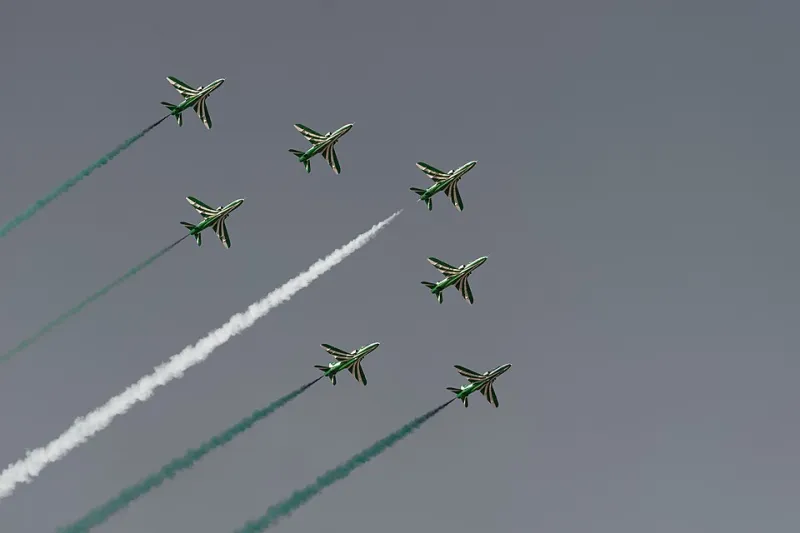
Photo: Meshari Alawfi, CC BY 4.0, via Wikimedia Commons
You've probably heard someone say that rap is the most linguistic art form in popular music. And honestly, that argument holds up — until you start listening to what's happening in Seoul, Shanghai, Tokyo, and Manila. Because once you go deep into Asian hip-hop, you start to realize that English-language rap, for all its brilliance, is working with one hand tied behind its back.
It's not a diss. It's just phonetics.
The rappers building scenes across South Korea, China, Japan, and Southeast Asia aren't just doing what American artists do but in a different language. They're exploiting linguistic structures that English doesn't have — tonal complexity, homophone density, syllabic compression — to create wordplay that is, in the most literal sense, untranslatable. When you run these verses through Google Translate or even a skilled human interpreter, something fundamental collapses. The bars survive. The flex doesn't.
The Tone Game: Why Mandarin Rap Hits Different at the Frequency Level
Start with Mandarin Chinese, and you immediately understand why this conversation matters. Mandarin is a tonal language with four distinct tones — plus a neutral tone — meaning the same syllable pronounced at different pitches carries entirely different meanings. The word mā means mother. Má means hemp. Mǎ means horse. Mà means to scold.
Now imagine building a rap verse where a single syllable can carry four simultaneous meanings depending on how you pitch it — and where a skilled rapper can layer all four into a single line, letting the listener's brain fire in multiple directions at once.
Artists like GAI, Vava, and Higher Brothers have been doing exactly this for years, and the density of meaning packed into their verses is something that Western hip-hop structurally cannot replicate. When Higher Brothers dropped Made in China, American audiences heard bravado and energy. Chinese listeners heard a verse where tonal puns were firing on multiple levels simultaneously, referencing cultural touchstones and linguistic jokes that lived entirely in the space between meanings.
You can translate the words. You cannot translate the architecture.
Korean's Homophone Playground and the Art of the Double Bar
Korean hip-hop operates on a different but equally complex linguistic playing field. Korean is rich with homophones — words that sound identical but carry completely different meanings — and the country's rap scene has turned this into a high art form.
Take Epik High, whose member Tablo studied English literature at Stanford and brings that analytical precision to Korean wordplay. Or consider the way artists like Zico and pH-1 construct verses where a single phonetic sequence can be parsed as two entirely different sentences depending on where you mentally place the word breaks. Korean's agglutinative grammar — where meaning is built by attaching suffixes to root words — gives rappers a kind of modular construction kit that English speakers don't get to play with.
When Zico performs live and the crowd erupts at a specific bar, foreign fans watching the clip often wonder what just happened. What happened is that a single four-syllable phrase just meant two contradictory things at once, and the crowd caught both readings simultaneously. That's not a translation problem. That's a language architecture problem.
Japanese Rap and the Weight of Kanji
Japanese hip-hop adds yet another dimension that makes translation feel almost beside the point. Written Japanese uses kanji — Chinese-derived characters — alongside two phonetic syllabaries, and skilled Japanese rappers exploit the gap between how a word sounds and what character it implies.
In written Japanese, a rapper can choose a homophonous kanji that carries a completely different visual and cultural meaning, creating a pun that only exists in the written form of the song — visible in lyric videos and liner notes, invisible to the ear alone. Artists like Kohh, Taro Soul, and the late ANARCHY built careers on this kind of layered communication, where the performed verse and the written verse are doing different things at the same time.
For American listeners, this is genuinely mind-bending. We're used to lyrics that mean what they sound like they mean. Japanese hip-hop sometimes requires you to read the verse to catch the second half of the joke.
Southeast Asia's Multilingual Flex
Move into Southeast Asia and the complexity multiplies again, this time through code-switching. Filipino rap — from Gloc-9 to Shanti Dope to the massive wave of artists coming out of the OPM scene — routinely blends Tagalog, English, regional dialects, and slang within a single verse in ways that aren't just stylistic choices. They're statements about identity, class, and colonial history.
When a Filipino rapper drops a line in Tagalog, switches to English for the punchline, then lands the couplet in Bisaya, they're not just showing off multilingual range. They're navigating a cultural landscape shaped by Spanish colonization, American occupation, and a contemporary globalized identity that refuses to be monolingual. The translation isn't lost — it's the whole point.
Similarly, Malaysian and Indonesian rap scenes have built entire aesthetic identities around the tension between Bahasa and English, with artists using language-switching as a form of social commentary that lands completely differently for different segments of their own domestic audience — let alone for US listeners encountering the music cold.
What Western Hip-Hop Is Starting to Hear
Here's where the story gets interesting for American audiences: these techniques are starting to bleed into Western production and flow patterns, even if the borrowing is happening below the surface.
Producers who've spent time in Seoul's studio ecosystem have brought back a sensitivity to syllabic density and rhythmic compression that's showing up in trap and drill production. The influence of K-hip-hop's precision — the way artists like pH-1 or Lil Tecca-adjacent Korean acts treat consonants as percussion — is audible in how some younger American artists are approaching their cadences.
More visibly, the global success of acts like BTS, who brought Korean wordplay and cultural layering to mainstream American consciousness, opened a door that's proving hard to close. Once you've heard a verse where the phonetics are doing three jobs simultaneously, standard English bars can start to feel a little one-dimensional.
Why This Matters Beyond the Music Nerd Rabbit Hole
For listeners in the US, the takeaway here isn't just that Asian hip-hop is technically impressive. It's that the most exciting linguistic innovation in rap right now is happening in languages most American fans haven't been trained to hear.
When you encounter a track from Higher Brothers or Zico or Kohh and feel like something is going over your head — you're right. Something is. And the honest answer isn't to find a better translation. It's to understand that some of what's happening in these verses was built to live in a specific language, in a specific cultural moment, and that the gap you're sensing is actually the whole story.
That gap is worth sitting with. Because it's telling you something real about what language is, what rap can be, and how much of the world's most interesting music is currently being made in bars that English simply cannot hold.