Reggaeton, Afrobeats, and Beyond: Your No-Nonsense Guide to Actually Understanding the Global Hits You Can't Stop Playing

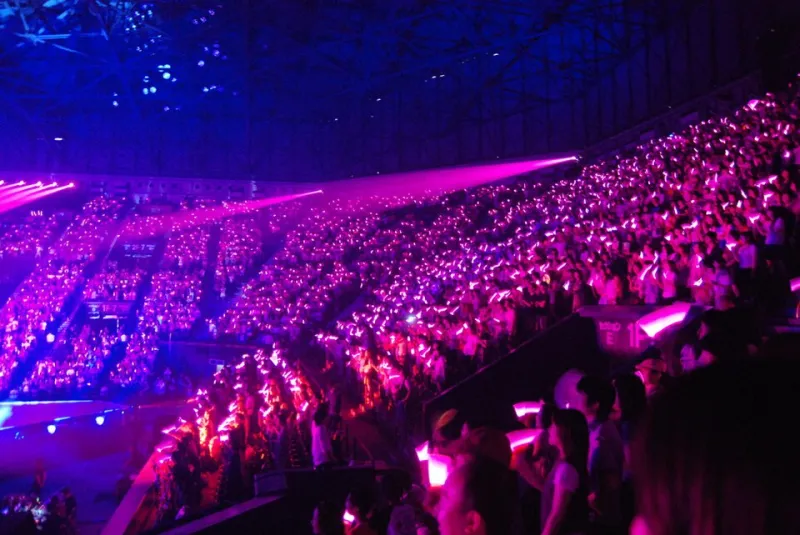
Photo: kallerna, CC BY-SA 3.0, via Wikimedia Commons
Let's be honest. You've added "Tití Me Preguntó" to every playlist you own. You've played "Last Last" until your algorithm thinks you live in Lagos. You know the hook, you feel the energy, and you've definitely attempted the dance. But do you actually know what these songs are saying?
No judgment — this is a safe space. But here at Translate Tracks, we think knowing the story behind a song makes it hit about ten times harder. So we put together this genre-by-genre breakdown of the global music taking over American streaming, complete with the slang, the cultural context, and the reason direct translation almost always misses the point.
Buckle up. Class is in session.
🎵 Reggaeton: It's Puerto Rican Street Poetry (And It's More Layered Than You Think)
The genre: Reggaeton grew out of Puerto Rico in the late '90s, blending Jamaican dancehall, Latin hip-hop, and Caribbean rhythms. The dembow beat — that signature syncopated pattern — is the backbone of the genre, and it originated in Jamaican reggae before being adopted and transformed in San Juan.
The language situation: Reggaeton is sung in Spanish, but not the Spanish you learned in high school. It's Puerto Rican Spanish, which has its own slang, cadence, and cultural references. Artists like Bad Bunny, Daddy Yankee, and J Balvin code-switch constantly, mix in English phrases, and use terminology that's hyper-specific to Caribbean Latino culture.
A track to dig into: Bad Bunny's "Tití Me Preguntó" (from his landmark album Un Verano Sin Ti)
A direct translation of the title gives you "My Aunt Asked Me" — which sounds like the setup to a very boring story. But in Puerto Rican family culture, tití (auntie) is a specific figure: the family member who's always in your business, always asking when you're getting married, always wanting to know why you're still single. The song is about Bad Bunny clapping back at that pressure by listing all the women he's seeing instead of settling down. It's playful, it's a little braggadocious, and it's deeply rooted in a cultural dynamic that Latino families across the US will immediately recognize.
The broader album is also a love letter to Puerto Rico itself — full of references to specific neighborhoods, local slang (broki for "bro," janguear for "hang out"), and the island's complicated relationship with its diaspora. None of that survives a word-for-word translation.
What gets lost: The warmth and specificity of the family humor. The pride in Puerto Rican identity. The layered meaning of perreo (the signature reggaeton dance style) as both a party move and a cultural assertion.
🎵 Afrobeats: Lagos Energy, Global Frequency
The genre: Afrobeats (note: distinct from the older "Afrobeat" associated with Fela Kuti) is a broad umbrella term for contemporary West African popular music — particularly the sound coming out of Nigeria and Ghana. Think Burna Boy, Wizkid, Tems, Davido, and Rema. It blends Yoruba musical traditions with American R&B, hip-hop, and dancehall.
The language situation: Most Afrobeats tracks mix English with Yoruba, Pidgin English (Nigerian Pidgin is a creole language with its own grammar and vocabulary), and Igbo. The English portions can be deceptive — they sound familiar, but the words often carry entirely different meanings.
A track to dig into: Burna Boy's "Last Last"
The title alone is a Pidgin phrase meaning "in the end" or "ultimately" — as in, after everything, this is where we ended up. The song is Burna Boy processing a breakup, but the emotional register is very specifically West African in its delivery: stoic on the surface, devastated underneath, with a kind of philosophical acceptance that's baked into the Pidgin phrasing.
The line "na your matter dey worry my head" translates roughly to "thoughts of you are consuming me" — but the Pidgin construction carries a specific texture of helpless preoccupation that the English version softens considerably.
Wizkid's smash "Essence" (featuring Tems) is another masterclass in this. The lyrics float between English and Yoruba in a way that's musically seamless but culturally specific — certain phrases are compliments that only fully land if you understand the Yoruba concept of inner beauty (ìwà) being inseparable from outer grace.
What gets lost: The emotional stoicism that's culturally coded in Nigerian masculinity. The specific textures of Pidgin that make heartbreak sound both matter-of-fact and devastating. The Yoruba spiritual undertones in words that look like simple compliments.
🎵 Latin Pop and Urban: The Spanglish Spectrum
The genre: This one's huge and varied — from Rosalía's flamenco-influenced pop to Karol G's Colombian trap, to the Mexican regional sounds of Peso Pluma. Latin pop is not a monolith, and that's exactly why one translation approach can't cover it.
The language situation: Spanish, yes — but Colombian Spanish sounds nothing like Mexican Spanish, which sounds nothing like Castilian Spanish. Regional slang, local references, and even the rhythm of speech differ dramatically.
A track to dig into: Karol G's "Bichota"
The word bichota is Colombian slang derived from bicho — which in many Latin American countries means a bug or critter, but in Colombian street slang has evolved into something closer to "a powerful, self-made boss." Specifically, it refers to a woman who's built her own empire, answers to no one, and commands respect. It's reclaimed slang, and it carries the weight of that reclamation.
Translate it directly and you get something that sounds vaguely like an insult. Understand the cultural context and you understand why Karol G chose it as a self-identifier — and why Colombian women in particular received it as an anthem.
What gets lost: The reclamation narrative. The specific Colombian street credibility embedded in the slang. The feminist assertion hiding inside what sounds like a party song.
🎵 Amapiano: South Africa's Export You Need to Know
The genre: Amapiano is a South African house music style that's been quietly (then loudly) infiltrating global playlists. Artists like Kabza De Small, DJ Maphorisa, and Focalistic are its architects. The name literally means "the pianos" in Zulu.
The language situation: Amapiano tracks often feature Zulu, Sotho, Tsonga, and South African township slang (tsotsitaal). This is one of the least-translated genres in the US market, which means American listeners are often vibing entirely on feel.
What to know: The genre is deeply tied to South African township culture (kasi life) — the communal outdoor parties, the specific social rituals, the local legends referenced in lyrics. When an Amapiano track goes viral on TikTok, American users are often dancing to songs that are essentially inside jokes and community celebrations for South African listeners.
That's not a problem — music transcends language — but knowing the story makes the celebration feel more real.
The Bottom Line: Vibe Is Real, But Story Is Better
Here's the thing about global music: the feeling travels even when the words don't. That's the magic of it. You don't need to speak Yoruba to feel Burna Boy's heartbreak, or understand Puerto Rican slang to dance to Bad Bunny.
But when you do take the time to understand what's actually being said? The song becomes something else entirely. You're not just a listener anymore — you're a participant in someone's story, someone's culture, someone's specific and irreplaceable way of seeing the world.
That's what Translate Tracks is built for. Because every song has a story worth hearing — and the best version of that story is always the original one.