Corridos, Code Words, and Chaos: What US Listeners Are Actually Missing in Latin Trap's Most Intense Tracks
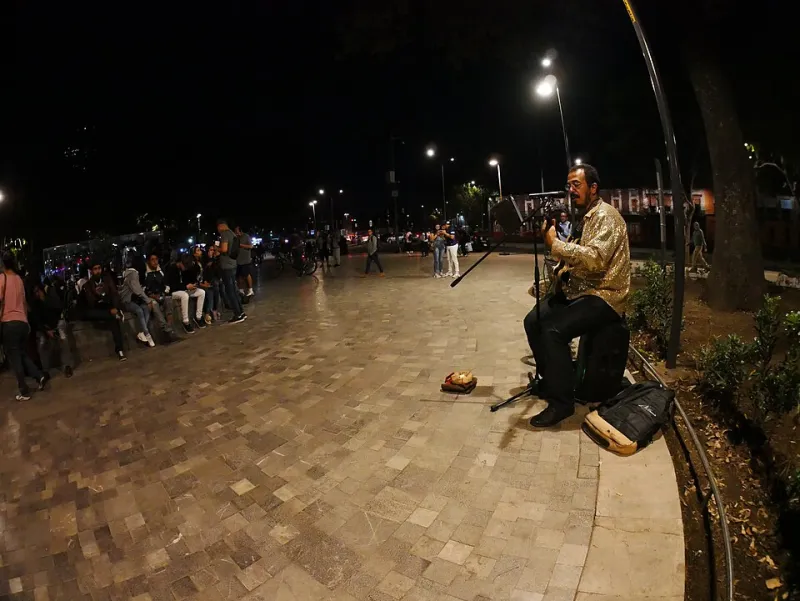
Photo: Thayne Tuason, CC BY-SA 4.0, via Wikimedia Commons
Scroll through any major playlist on Spotify right now and you'll find them sitting comfortably between Drake cuts and Bad Bunny singles — corridos tumbados, Latin trap anthems, and narco-adjacent bangers that hit with a kind of raw, unfiltered energy that feels almost cinematic. You don't need to speak Spanish to feel it. The production alone — those stuttering trap hi-hats layered over a wailing bajo sexto, or the pitch-shifted vocals floating over a minor-key beat — tells you something heavy is going on.
But here's the thing: if you're listening without understanding the words, you're only getting about twenty percent of the actual song.
The other eighty percent? That's where it gets genuinely fascinating.
The Corrido Isn't Just a Genre — It's a Newspaper
To understand why modern tracks from artists like Natanael Cano, Peso Pluma, or Junior H carry such weight, you have to go back further than SoundCloud. The corrido is one of the oldest musical traditions in Mexico, functioning for over a century as a kind of oral journalism. Before radio, before television, before social media, traveling musicians spread news of battles, outlaws, and political upheaval through these narrative ballads.
The Mexican Revolution produced hundreds of corridos. Figures like Pancho Villa and Emiliano Zapata weren't just historical leaders — they became corrido protagonists, their stories sung from town to town. The genre was always about people the official record ignored or criminalized.
Fast forward to today, and corridos tumbados — the trap-influenced evolution pioneered largely by Natanael Cano — are carrying that same DNA. When a 20-year-old in Culiacán or Los Angeles hears a corrido that names a specific street, a specific kind of loyalty, or a specific kind of loss, it isn't abstract. It's reporting. It's documentation of a life that mainstream media rarely covers with any nuance.
American listeners often register the intensity without understanding why it's intense. The answer is almost always historical.
The Slang Is Doing Heavy Lifting
Let's talk about the actual language, because this is where translations — even decent ones — tend to fall apart.
Latin trap and corrido lyrics are loaded with regionalism, narco-adjacent slang, and double meanings that shift depending on context, state, and even neighborhood. Words that look completely innocent in a literal dictionary translation carry enormous weight on the street.
Take the word jale — technically it just means "pull" or "job." But in the context of a corrido or trap track, it almost universally refers to criminal work, specifically moving product or carrying out assignments for an organization. When an artist says he's got his jale handled, no bilingual dictionary is going to give you the full picture.
Or consider plebada — a term popular in Sinaloa slang that refers to the young people, the crew, the homies coming up. It's affectionate and territorial at the same time. When Natanael Cano shouts out the plebada, he's not just greeting fans. He's acknowledging a specific social class, a specific geography, a specific set of struggles.
Then there's the way artists use corrido itself as a kind of meta-reference — singing about the tradition of singing, acknowledging that by making the song, they're participating in a centuries-old act of resistance and documentation. That layer of self-awareness is almost entirely invisible if you're only reading a surface-level translation.
Why These Songs Sound "Dangerous" Even When They're Not
Here's something worth sitting with: a lot of Latin trap and corrido tracks that feel menacing to American ears are actually love songs, road trip anthems, or straight-up flex records — not unlike what you'd find anywhere in hip-hop or country music.
The "danger" perception often comes from three places.
First, the production. Minor keys, chromatic accordion lines, and trap percussion create a sonic palette that Western pop listeners have been trained to associate with tension and threat. Add pitch correction that pushes vocals into an almost ghostly register, and the emotional signal is intensity before a single word lands.
Second, the unfamiliarity of the language itself. Research has consistently shown that people rate unfamiliar languages as more aggressive-sounding than familiar ones, even when the content is completely neutral. If you don't speak Spanish fluently, your brain is filling in gaps with assumptions — and those assumptions are often shaped by years of Hollywood's lazy conflation of Spanish-language music with cartel drama.
Third, the context of the artists' real lives. Many of the biggest names in corridos tumbados grew up in regions of Mexico deeply affected by cartel violence and economic instability. That reality bleeds into the music — not always as glorification, but as witness. There's a difference between a song that celebrates violence and a song that describes the world violence created. American listeners, without the cultural context, often can't tell which one they're hearing.
What Peso Pluma Is Actually Saying
Peso Pluma's rise to global stardom is one of the most interesting case studies in music translation — or the lack of it. His 2023 breakout wasn't just a streaming phenomenon; it was a cultural moment that left a lot of US media scrambling to explain what was happening and why.
Tracks like Ella Baila Sola (with Eslabon Armado) or Lady Gaga are full of layered references that reward close listening. The Lady Gaga track, for instance, uses the pop icon's name not as a tribute but as slang — a reference to someone flashy, untouchable, performing a kind of theatrical confidence. The song is really about projection, about the performance of power. That reading changes everything about how you hear the track.
His corrido tracks frequently reference specific highways, cities, and regional power dynamics in ways that function almost like a geographic map of influence. For listeners in Jalisco or Sinaloa, those references are immediate and visceral. For a listener in Chicago or Atlanta, they register as vague atmosphere — which is a shame, because the specificity is exactly what makes the storytelling so sharp.
How to Actually Listen to These Songs
This is where Translate Tracks earns its name. Listening to Latin trap and corridos without translation is like watching a foreign film with the subtitles off — you can appreciate the cinematography, but you're missing the plot.
A few approaches that actually work:
Start with the nouns. Places, names, and objects in corridos are almost always doing symbolic work. A specific city isn't just a setting — it's a statement of allegiance. A specific car or weapon isn't just a prop — it's a status marker with a whole cultural shorthand attached.
Look for the narrative arc. Corridos almost always tell a story with a beginning, middle, and end. Even trap-influenced versions maintain this structure. Once you find the story, the emotional logic of the song becomes clear.
Read multiple translations. One translation will give you the words. A second will give you the context. The gap between them is where the actual meaning lives.
Pay attention to what's not said. The most powerful lines in corrido tradition are often elliptical — they gesture toward something rather than stating it directly. That indirection is a feature, not a bug. It's how the genre survived censorship and official pressure for over a hundred years.
The Bottom Line
Latin trap and corridos tumbados aren't just a trend on your algorithm's radar. They're the latest chapter in one of the Western Hemisphere's most durable storytelling traditions — one that has always been about giving voice to people and experiences that the mainstream would rather ignore.
When you understand what's actually being said, the music doesn't get less intense. It gets more intense — because now the intensity means something specific. And that's exactly the kind of listening experience these songs were built for.