The Records Our Grandparents Played at Full Volume: Finally Understanding the Songs of Our Childhood Kitchens
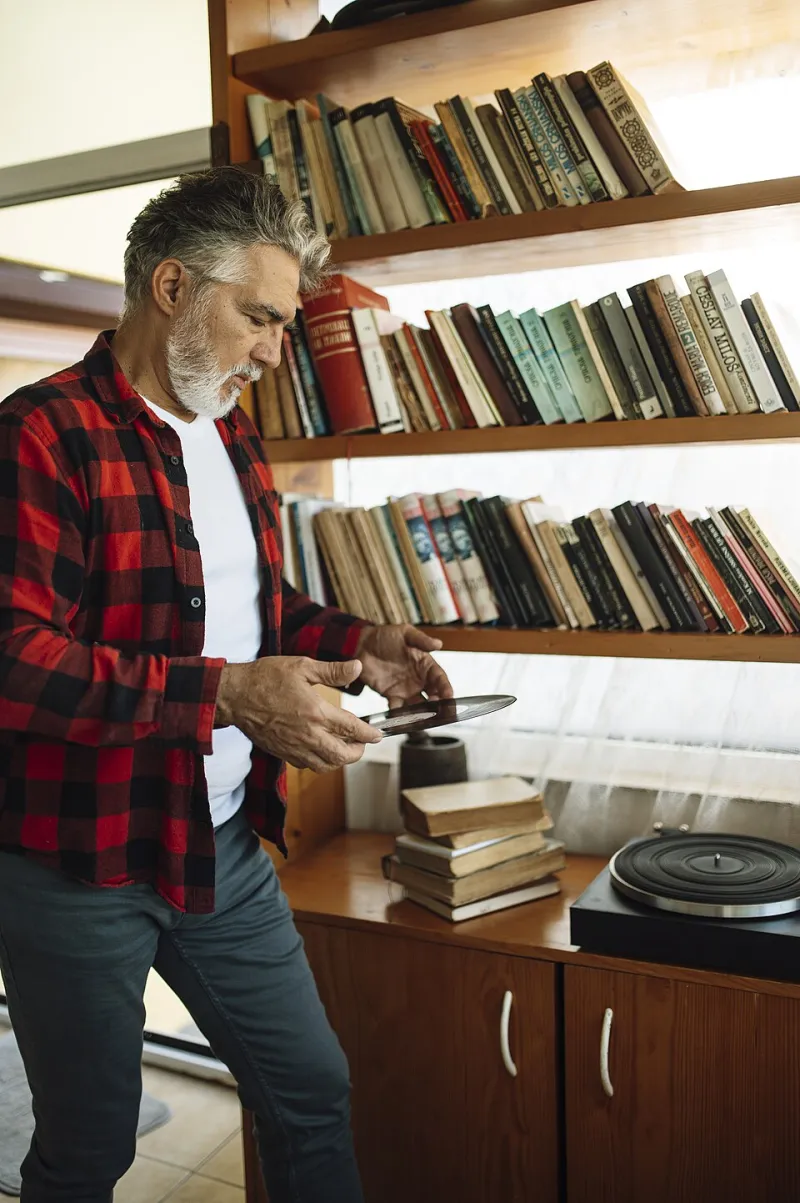
Photo: Shixart1985, CC BY 2.0, via Wikimedia Commons
Every immigrant kid knows the soundtrack. It played on a cabinet-sized stereo in the living room on Sunday mornings, or from a phone propped against the kitchen windowsill while someone rolled out dough. You didn't know what the words meant. You knew the mood — and you knew when to leave the room, because there was always one song that made your grandmother go quiet.
Now those songs are showing up on streaming. Spotify's vintage international playlists have become an accidental archive, and a whole generation of first-generation Americans is pressing play on their childhood and finally reading the fine print.
The Bolero That Was Never Just a Song
Take the bolero. If you grew up in a Mexican, Dominican, or Puerto Rican household, you've heard Bésame Mucho a hundred times without registering that it's a goodbye song written by a woman who had never been kissed. Consuelo Velázquez was fifteen when she penned it, imagining a love she wasn't allowed to have. "Bésame mucho, como si fuera esta noche la última vez" — kiss me like tonight is the last time. It's not a love song. It's a love song with a countdown clock in it.
One reader wrote to us about her father, a retired mechanic in Fresno, who used to sing along to Los Panchos while washing the car. "He never talked about leaving Guatemala," she said. "But when I finally translated the lyrics for him — perdóname la vida — he just nodded and said, 'Yeah, that's how it felt.'"
Canzoni, Nonnas, and the Art of Saying Goodbye in a Minor Key
Italian classics work on a similar frequency. Volare is famous worldwide, but the lesser-played Al di là — "beyond the beyond, you are for me" — is the one that makes nonnas cry at weddings. The sentiment barely survives translation into English; Italian lets you stack affection on top of affection in a way that sounds almost excessive until you realize restraint was never the point.
Then there's Tu Vuò Fà L'Americano, the Neapolitan track that sounds like pure party. It is — but it's also a roast. The song mocks a kid from Naples who dresses like an American, drinks whiskey and milk, and dances rock 'n' roll while his mom washes his jeans. Every time it shows up in a movie as fun, sunny Italian vibes, it's quietly making fun of exactly the kind of person playing it.
Punjabi Folk and the Women Who Sang Through It
The Punjabi side of the archive hits differently. Songs like Heer and old Jugni recordings were sung by women whose names nobody wrote down — folk ballads about love, separation, and running off with your own story. When second-generation listeners translate Heer's verses for the first time, the shock is common: these aren't quaint old tunes. They're rebellion in four-minute increments.
A reader in Edison, New Jersey told us his mother used to hum one particular track while cooking. When he finally showed her a written translation, she corrected him — twice — then admitted she'd never actually seen the words on paper. She learned it from her grandmother, who learned it from hers. The song had been passed down like a recipe, no measurements.
Why This Resurrection Is Happening Now
Streaming flattened music geography. Your dad's cassette of vintage cumbias and your algorithm's taste for global sounds are now neighbors on the same platform. Meanwhile, TikTok has turned 60-year-old international tracks into overnight viral moments — a snippet of a 1975 bolero can hit millions of American feeds in a week, usually with a caption that translates one devastating line.
That's the pattern, really. One line, translated, is enough to undo thirty years of background noise. The songs our grandparents played weren't asking to be understood. But it turns out they had a lot to say, and most of it — longing, humor, defiance, a specific kind of homesickness English doesn't have a word for — lands harder now than it ever did on that Sunday-morning stereo.
Put your grandmother's playlist on. Bring a translator. Bring tissues.