What Gets Lost When You Translate Love: The Hidden Language Inside Arabic, Turkish, and Persian Songs
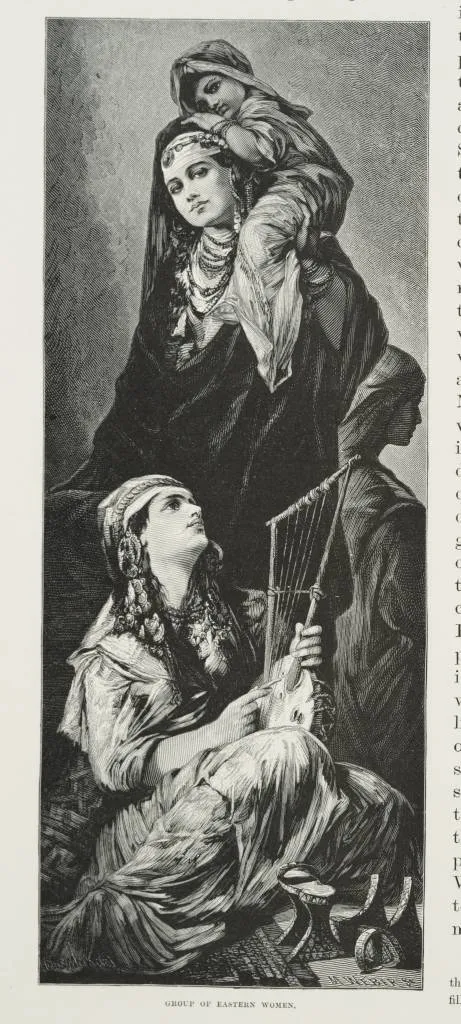
Photo: Hans Makart, CC BY-SA 2.5, via Wikimedia Commons
You pull up a Lebanese pop track on Spotify. The melody is gorgeous, the singer's voice aches in all the right places, and the vibe hits you somewhere deep even though you don't speak a word of Arabic. You search for the English translation, skim through it, and think — okay, it's a love song. Nice.
But here's the thing: you just read the shadow of the song, not the song itself.
Arabic, Turkish, and Persian music operates on a level of layered meaning that doesn't just get lost in translation — it gets demolished by it. These aren't languages that say one thing and mean one thing. They're built on centuries of poetry, coded social commentary, and double meanings so elegant that native speakers feel the wordplay physically before they even process it consciously. For a US listener coming in cold, it can feel like watching a magic trick without knowing the magician even did anything.
Let's break down what's actually happening.
The Persian Poetic Inheritance Nobody Warned You About
If you've ever heard a Persian song and felt like the lyrics were almost too beautiful — like they were reaching for something beyond a normal pop song — that's not an accident. Persian music carries the direct genetic code of classical poets like Hafez, Rumi, and Sa'di. These writers have been dead for centuries, but their imagery is still alive and breathing inside contemporary Iranian pop, folk, and even some diaspora hip-hop.
The word del (دل), for example, translates literally as "heart," but in Persian emotional vocabulary it functions more like the seat of the entire soul — your gut feeling, your longing, your spiritual center, all rolled into one syllable. When an Iranian singer says their del is burning, they're not describing heartburn. They're invoking a centuries-old poetic tradition of divine longing, separation from God, exile, and unrequited love all fused together. An English translation that just says "my heart is on fire" strips out about 800 years of meaning.
Then there's gham (غم) — often translated as "sadness" — which actually describes a specific, almost philosophical state of beautiful melancholy. It's a grief you sit with, not one you run from. Persian music doesn't just express gham; it celebrates it as a mark of depth and feeling. That's a completely different emotional relationship with sadness than most American pop music offers.
Turkish Double Talk: When the Song Is Also a Protest
Turkish music has a long history of saying dangerous things in safe-sounding ways. During politically repressive periods throughout the 20th century, Turkish folk singers and poets developed a practice of encoding social criticism inside love songs so thoroughly that the government couldn't always tell what was being said — but the people absolutely could.
The tradition of halk müziği (folk music) is full of songs where "the beloved" is actually the homeland, freedom, or a political movement. When a classic Anatolian folk song mourns a lover who has gone away and won't return, it might be mourning an exiled revolutionary, a disappeared village, or a suppressed language. The surface is romantic. The inside is entirely something else.
This isn't just historical, either. Contemporary Turkish artists still use this layering — sometimes because it's artistically richer, sometimes because ambiguity offers protection. When you hear a modern Turkish indie track lamenting distance and loss, you're often listening to something that works on at least two levels simultaneously. A translation that picks one reading and runs with it is making an editorial choice the original artist deliberately refused to make.
There's also the matter of Turkish wordplay itself. Turkish is an agglutinative language — it builds meaning by stacking suffixes onto root words — which means a single word can carry nuances that take an entire English sentence to approximate. Songwriters exploit this constantly, choosing words that vibrate with multiple meanings at once. The pun, the double entendre, the echo of an older word inside a newer one — all of that evaporates in a straight translation.
Arabic and the Art of the Implied
Levantine Arabic — the dialect you'll hear in Lebanese, Syrian, and Palestinian music — has a particular genius for what doesn't get said. Arabic poetry and song have always valued kinaya, a form of indirect expression where the real meaning hides just beneath the stated one. It's not quite metaphor and not quite euphemism — it's more like a knowing wink embedded in the grammar itself.
Take the word ghayb (غيب) — absence, the unseen, the unknown. In religious Arabic it refers to the divine mystery, the hidden nature of God. In a love song, a singer invoking their lover's ghayb is pulling all of that weight into a romantic context. The beloved becomes something sacred, their absence becomes cosmically significant. An English translation that says "I miss you when you're gone" has technically conveyed the information while completely losing the emotional stakes.
Lebanese pop star Fairuz — whose recordings are essentially the soundtrack of an entire culture — built her entire legacy on this kind of layering. Her songs about longing for a city, a home, or a person are so interwoven with Lebanese national identity, diaspora grief, and religious imagery that even Arabic speakers from different regions sometimes experience her differently depending on their background. There's no translation that captures that. There's barely a single listening that captures it all at once.
And then there's the role of maqam — the melodic mode a song is built on — which carries its own emotional vocabulary in Arabic musical tradition. Certain maqamat are associated with grief, others with joy, others with spiritual transcendence. A listener who knows the tradition hears the emotional framework before a single word is sung. A listener without that context is hearing the melody naked, without the code.
Why This Matters for How You Listen
None of this is meant to make you feel like you're doing it wrong. Feeling the emotion of a song in a language you don't speak is real, and it counts. Music is doing something primal that transcends translation entirely.
But there's a difference between feeling a song and understanding it — and for Arabic, Turkish, and Persian music especially, the gap between those two experiences is enormous. These are musical traditions built by cultures that treated poetry as the highest art form, where lyrical genius wasn't a nice bonus but the whole point. The wordplay isn't decoration. It's the architecture.
When you know that a Persian singer's "wine" might be divine love, that a Turkish folk song's "mountain" might be exile, that an Arabic lyric's "moon" carries a specific weight of classical imagery — the song doesn't just get more interesting. It becomes a completely different object.
That's what Translate Tracks exists for. Not to replace the feeling, but to give it a foundation. Because every one of these songs has a story inside the story, and once you hear it, you can't unhear it.