Plastic Love and Midnight Drives: The Real Stories Behind Japan's City Pop Obsession
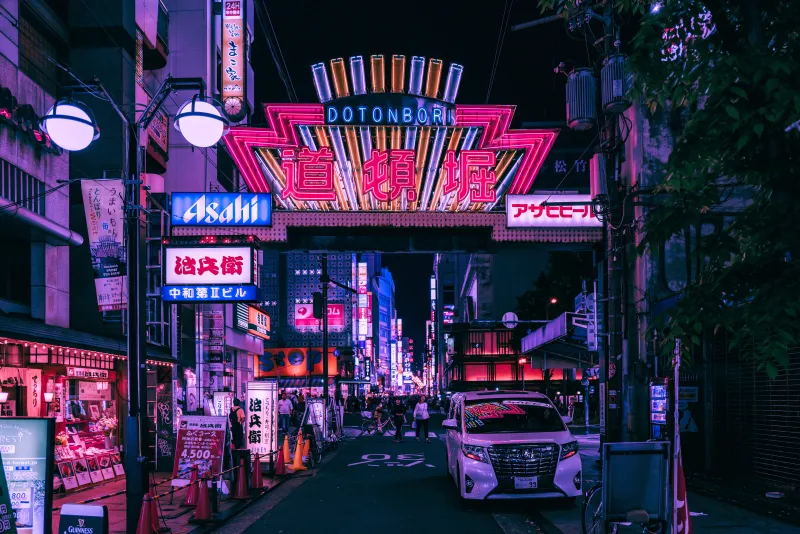
Photo: Tokyo 1980s neon city nightlife retro Japan urban street, via wallpapers.com
You've probably heard it by now. Maybe it snuck into a YouTube autoplay queue at 2 a.m., or a friend dropped Mariya Takeuchi's "Plastic Love" into a road trip playlist without explanation. Either way, something about it stuck. That warm, woozy saxophone. The drum machine that somehow feels both retro and completely fresh. The voice that sounds like it's coming from another dimension — or at least another decade.
Japanese city pop has become one of the more unexpected streaming phenomena of the last several years in the US, pulling in millions of plays on Spotify and YouTube from listeners who, for the most part, don't speak a word of Japanese. And that's exactly what makes it so fascinating — and exactly why it's worth slowing down and actually listening to what these songs are saying.
Because there's a lot going on beneath the surface.
What Even Is City Pop?
City pop (シティ・ポップ) emerged in Japan during the late 1970s and hit its peak through the 1980s, riding the wave of Japan's economic boom. Tokyo was transforming into a glittering, high-speed metropolis, and the music reflected that energy — sophisticated, cosmopolitan, and heavily influenced by American funk, soft rock, and jazz fusion. Artists like Tatsuro Yamashita, Mariya Takeuchi, Anri, and Miki Matsubara crafted a sound that felt aspirational, urban, and undeniably cool.
But here's the thing: while the production was optimistic and sun-drenched, the lyrics often told a very different story.
"Plastic Love" Isn't Actually a Feel-Good Song
Let's start with the big one. Mariya Takeuchi's "Plastic Love" (1984) is arguably the track that introduced city pop to a new generation of global listeners after a YouTube algorithm quirk sent it viral around 2017. The production is pristine — it sounds like a summer evening on a yacht. But the lyrics? They're about self-protective emotional numbness after heartbreak.
Takeuchi wrote the song from the perspective of a woman who has deliberately closed herself off from real love. She dates casually, keeps things light, and refuses to let anyone in — not because she's carefree, but because she's been hurt badly and doesn't trust herself to go through that again. The "plastic" in the title refers to the artificial, disposable quality of the relationships she's settling for. She even acknowledges, in the lyrics, that she knows what she's doing is wrong — that she's wasting both her time and the time of the men she's with.
It's a quietly devastating portrait of someone using busyness and romantic detachment as armor. And most American listeners have been dancing to it without knowing any of that.
Tatsuro Yamashita and the Loneliness of the City at Christmas
If Mariya Takeuchi is the queen of city pop, Tatsuro Yamashita is its undisputed king. His 1983 track "Christmas Eve" became one of the best-selling singles in Japanese history and is still played on loop across Japan every December. American listeners who've discovered it tend to describe it as cozy and nostalgic — which isn't wrong, but it barely scratches the surface.
The song is about waiting. Specifically, it's about standing alone in a cold, glittering city on Christmas Eve, watching couples pass by, and holding onto the fragile hope that the person you love might still show up. There's no triumphant reunion in the lyrics. The narrator isn't sure the person is coming. He's just… hoping. The snow keeps falling. The city keeps moving. And he stays.
In the context of Japan's rapidly urbanizing society in the 1980s, that image hit hard. Tokyo was full of young people who had moved away from their hometowns to chase careers, often at the cost of their personal lives and relationships. The song captured something real about that trade-off — the loneliness that can exist right in the middle of a city full of people.
Why These Songs Hit Different When You Know the Words
Part of what makes city pop so universally appealing — even to listeners who don't understand Japanese — is that the emotional texture of the music already communicates something. The productions are masterfully crafted to feel like a specific kind of wistfulness: warm but slightly out of reach, joyful but tinged with something heavier.
But when you add the actual lyrical content, the experience deepens considerably. Anri's "I Can't Stop the Loneliness" and Miki Matsubara's "Stay With Me" both deal with themes that feel remarkably modern — the push and pull of wanting connection while also fearing it, the way city life can make you feel simultaneously overstimulated and deeply alone.
These aren't just mood songs. They're narratives. And translating them reveals a sophistication that deserves to be recognized.
The Algorithm Did Something Accidentally Smart
The city pop revival in the US didn't happen because of some coordinated marketing push or a Netflix documentary. It happened because YouTube's recommendation algorithm started surfacing these tracks to listeners who had been playing lo-fi hip-hop, vaporwave, and chillout playlists. The aesthetic overlap was real — city pop samples have been used extensively in lo-fi beats, and the nostalgic, slightly melancholy vibe of the genre mapped perfectly onto the emotional needs of a generation of listeners seeking comfort in music.
What the algorithm couldn't do, though, was translate. It could surface the sound, but not the story. That gap is exactly what's worth closing.
A New Way to Listen
If you're already a city pop fan, consider going back to your favorite tracks with translated lyrics in hand. Sites like Lyrics Translate and various fan communities have done incredible work making these songs accessible in English. Reading along while you listen doesn't break the magic — if anything, it makes the music feel more alive.
And if you're new to the genre, start with the classics: "Plastic Love," "Christmas Eve," Anri's "Nite Flite," or EPO's "DOWN TOWN." Each one is a complete short story set to an immaculate soundtrack.
City pop became timeless in Japan because it told the truth about what it felt like to be young, ambitious, and a little lost in a city that never slowed down. Forty years later, that truth still translates — even when the words don't. Imagine how much more it lands when they do.