When French Breaks Your Heart Better Than English Ever Could

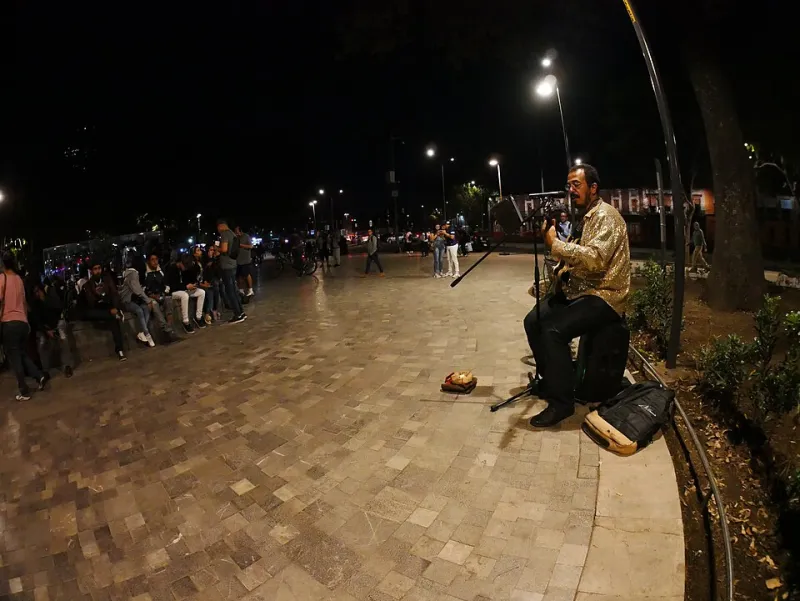
Photo: Cristina Naccarato from Windsor, Ontario, Canada, CC BY-SA 2.0, via Wikimedia Commons
There's a moment every French learner knows. You're sitting in a café, or maybe just scrolling late at night, and a song comes on — Édith Piaf, maybe, or Jacques Brel, or something more recent like Stromae — and something about it just gets you. The melody wraps around you. The voice sounds like it's carrying the weight of something enormous. And you think: this is beautiful.
Then you look up the translation.
And suddenly, beautiful doesn't even begin to cover it.
French chanson — the tradition of deeply lyrical, emotionally loaded French song — has been influencing global pop culture for over a century. But for most American listeners, it's been appreciated at arm's length. We hear the mood. We feel the ache. We just don't fully know why it hits the way it does. That's the gap we're here to close.
The Language Was Built for This
Before we even get to specific songs, it helps to understand something about French as a language. French has a natural rhythmic quality — it's syllabic in a way English isn't, meaning syllables carry roughly equal weight rather than alternating between stressed and unstressed beats. That gives French lyrics a kind of rolling, hypnotic quality that English approximations almost always lose.
But it goes deeper than rhythm. French is a language steeped in ambiguity. The same word can shift meaning based on context, tone, or even punctuation — and French songwriters have historically leaned hard into that. The double entendre isn't just a stylistic flourish in chanson; it's practically a structural element. A song can be about a love affair and an entire generation's disillusionment at the same time, and the French will hold both meanings simultaneously without needing to choose.
English translation forces a choice. That's where the flattening happens.
What Piaf Was Actually Saying
Take Édith Piaf's "La Vie en Rose" — probably the most famous French song in America, which means it's also the most misunderstood. The English version gets rendered as something like seeing life through rose-colored glasses, a kind of optimistic haze. Sweet. Hopeful, even.
But the French phrase "en rose" carries a specific cultural weight. It's not just pink. In Piaf's era, and in her own brutal life story, seeing things en rose was a fragile, almost defiant act — the choice to find beauty while fully aware of the darkness surrounding it. Piaf wasn't a naive optimist. She was a woman who had survived poverty, loss, addiction, and grief, singing about the decision to still find love worth celebrating. That context transforms the song from a pretty melody into something closer to an act of survival.
Without the language, you get the pink. With it, you get the whole complicated human being choosing it.
Jacques Brel and the Art of Saying Everything Twice
If Piaf is France's most famous emotional export, Jacques Brel is its most dangerously underestimated one. His song "Ne Me Quitte Pas" gets translated into English as "If You Go Away" — and that version has been covered by everyone from Frank Sinatra to David Bowie. It's gorgeous. It's a classic.
It's also a significantly softer version of what Brel actually wrote.
The original French is unhinged in the best possible way. Brel doesn't just ask his lover not to leave — he offers to become her shadow, her dog, her rain. He spirals into increasingly desperate, almost surreal imagery, and the French syntax lets him pile these images on top of each other in a way that creates a kind of emotional avalanche. The grammar itself performs the breakdown. English translations smooth out those edges to make the song singable and radio-friendly, but in doing so they lose the specific texture of a person coming completely undone.
The French title alone — "Ne Me Quitte Pas" — is more direct and more raw than "If You Go Away." It's not conditional. It's a command born from panic: do not leave me. Full stop.
Stromae and the Modern Twist
This tradition isn't frozen in the mid-20th century. Belgian artist Stromae — who sings in French and has had genuine crossover success in the US — carries this same layered approach into contemporary pop production.
His song "Papaoutai" is a perfect example. On the surface, it's a catchy, danceable track with a slightly melancholy edge. The title sounds almost nonsensical to non-French ears. But "papaoutai" is a phonetic rendering of "papa où t'es" — "dad, where are you?" — written as a child might sound it out, running the words together the way kids do when they're calling out and not getting an answer.
The entire song is built on that phonetic trick. It's a grown man recreating the voice of a child looking for an absent father, and he hides it inside a word that looks made-up until you hear it out loud. US listeners who caught the song on playlists during its viral moment largely experienced it as a vaguely sad bop. French-speaking listeners heard a gut-punch about generational absence and the things children carry into adulthood.
Same song. Completely different emotional experience.
Why This Matters for How You Listen
Here's the thing about French chanson's influence on global pop: it's enormous and largely unacknowledged. The confessional singer-songwriter tradition, the idea that a pop song can carry genuine literary weight, the use of melody to create ironic distance from painful subject matter — all of that runs through the French tradition before it shows up in your Spotify Wrapped.
When you understand what Piaf, Brel, Gainsbourg, or Stromae are actually saying, you're not just appreciating a different culture's music. You're accessing a different philosophy of what a song is allowed to do. In the French tradition, a song doesn't have to resolve. It doesn't have to comfort you. It can sit in the ambiguity, hold the contradiction, and let you feel two opposite things at the same time.
That's not a translation problem. That's a feature.
How to Actually Start Hearing It
If you want to close the gap between feeling French chanson and understanding it, the move isn't to find the best English translation and call it done. It's to find a translation that explains the why — the cultural context, the wordplay, the specific emotional register of a phrase that doesn't map cleanly onto English.
That's exactly the kind of deep-dive translation work we do here at Translate Tracks. Not just word-for-word, but meaning-for-meaning. Because the story inside these songs is worth the extra step.
Start with Stromae's "Formidable" — a word that means wonderful in French but is deployed here with vicious irony — and see if the song sounds the same to you afterward.
Spoiler: it won't.